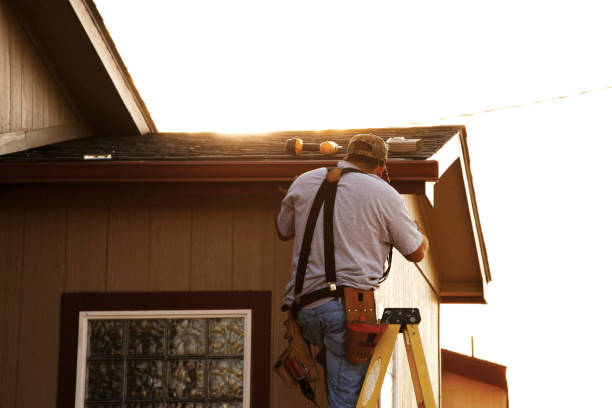

Loose gutter brackets usually point to more than a single bad screw. Support problems can begin in the fascia, hardware, spacing, or the structure behind the board, and each cause affects how securely the gutter stays aligned. Careful gutter installation inspection looks at the entire attachment system before deciding whether a bracket simply needs tightening or the surrounding materials need repair.
Fascia Rot Weakening the Bracket Fastening Point
Soft fascia cannot hold gutter fasteners with the same strength as sound wood. Moisture from roof leaks, overflowing gutters, failed drip edge details, or years of exposure can weaken the board around a hanger until screws begin pulling outward. Inspectors may press or probe the area near loose brackets to check whether the wood still offers solid resistance. Dark staining, peeling paint, splitting fibers, and fasteners that turn without tightening can all suggest deterioration. Reattaching a gutter to damaged fascia only hides the problem for a short time, so a gutter company may recommend repairing the board before resetting the gutter at the correct pitch.
Stripped Screws No Longer Holding Proper Tension
Repeated movement can enlarge a screw hole until the threads no longer bite into the material behind the gutter. Wind, water weight, thermal expansion, and earlier repair attempts can all contribute to a fastener that spins instead of tightening. Technicians check whether the screw itself is damaged or whether the hole has lost enough material that a new attachment point is needed.
Simply installing a thicker screw is not always the best answer. Oversized hardware can split weakened wood or create another short-lived repair if the surrounding fascia lacks strength. Proper rain gutter installation uses fasteners suited to the mounting surface and places them where they can develop reliable holding power without damaging the support beneath.
Brackets Spaced Too Far Apart Along the Gutter Run
Wide hanger spacing leaves longer sections of gutter carrying water and debris with less support. Heavy rain can make those unsupported areas flex, especially if leaves collect and add extra weight between brackets. Sagging often develops gradually, changing the gutter pitch and creating low spots where water sits after storms. Homeowners searching for gutter companies near me may notice loose brackets first, but the spacing pattern can be the underlying reason several attachment points are working harder than intended.
Fasteners Missing Solid Rafter or Subfascia Support
Strong attachment depends on what sits behind the visible fascia. Screws driven only into thin, deteriorated, or poorly supported material may look secure at first but loosen once the gutter fills with water. Contractors can check fastening depth and structural backing to determine whether brackets are anchored into dependable material.
Different roof edges require different mounting decisions. Older homes, wrapped fascia, unusual trim details, and repaired rooflines may not provide the same backing along the entire run. Experienced gutter installation crews identify those changes before placing hangers so fasteners do not end up in hollow areas or weak patches that cannot carry repeated loads.
Bent Hangers Pulling the Gutter Away From the Roofline
Bent hangers can pull the gutter out of alignment even if the screw remains tight. Impact from ladders, falling branches, ice, or years of loaded gutters can distort the hardware enough to change how the channel sits against the fascia. Misalignment can open gaps behind the gutter, alter the slope, and make nearby brackets carry more weight. Replacing damaged hangers restores support more effectively than forcing bent metal back into position, especially when several attachments show similar stress.
Corroded Hardware Losing Grip at Attachment Points
Rust weakens screws, brackets, and other metal parts by gradually reducing their strength. Exterior hardware faces constant moisture, temperature changes, and contact with wet debris, so unsuitable fasteners can deteriorate faster than the gutter itself. Crews look for rust around screw heads, flaking metal, staining, and brackets that feel thin or brittle.
Galvanic corrosion can also develop when incompatible metals stay in contact in the presence of moisture. That reaction may damage fasteners or gutter material around the attachment point even without obvious red rust. Knowledgeable gutter companies select compatible hardware during rain gutter installation so the bracket system can remain secure without creating avoidable reactions between metals.
Repeated Water Loading Loosening Brackets Over Time
Constant water loading can loosen brackets when drainage problems keep the gutter heavier than it should be. Poor pitch, clogged downspouts, undersized outlets, and debris buildup can leave water standing in the channel, placing steady force on hangers that were designed mainly to support moving runoff. Over time, that weight can widen fastener holes, bend brackets, and pull sections away from the fascia. Early correction can prevent one loose attachment from shifting the load onto neighboring hangers.
Apollo Roofing can help homeowners inspect loose gutter attachments, identify whether the cause involves fascia damage, hardware, spacing, drainage, or structural backing, and determine whether repair or a new gutter installation offers the better fix. Their team can address the support system along with water flow so replacement brackets are not asked to carry the same unresolved load that loosened the old ones.