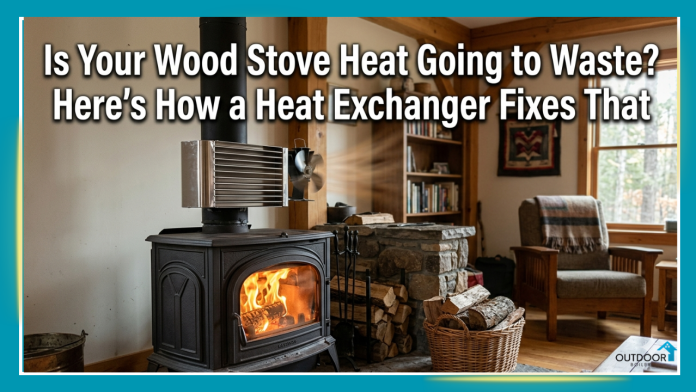

If you heat your home with a wood stove, you already know the feeling — that fantastic warmth radiating throughout the room on a cold night. But here’s one thing that most owners of wood stoves never think about: a significant amount of the heat that you are generating is going straight up your chimney, completely wasted.
I’ve been there. You’re burning through a cord of firewood every season, and half your house is still cold. The problem isn’t your stove. The trick would be to collect all the heat it generates. That’s where a hot water heat exchanger for wood stove systems becomes ever more significant — and frankly, after I learned how it operates, I was surprised that more people don’t use one.
What Happens to the Heat From Your Wood Stove?
Burning wood disperses energy as heat and effluent gases. A conventional wood stove puts heat directly into the room, which is good — but a lot of that thermal energy also goes up through the flue and out of your house as hot exhaust.
That’s why a crew at Enbridge would install heat exchangers, which help capture otherwise wasted combustion heat that can be lost through flue gases as they exit the chimney on older or less efficient heating setups, according to the U.S. Department of Energy. That’s real money — and real warmth — wasted.
A heat exchanger catches that wasted energy before it gets lost, and puts it to work for you.
So, What Exactly Is a Heat Exchanger?
A heat exchanger is a device that transfers heat from one medium to another — here, from the firebox or flue gases of your wood stove to water moving through pipes. That hot water can then be circulated around your house to heat radiators, radiant floor systems, and domestic hot water, or even an outbuilding like a garage or workshop.
It’s like a way to multiply the niceness of every log you burn. Rather than warming the room where the stove is located, you are distributing that heat energy wherever you need it.
How Does a Wood Stove Heat Exchanger Work?
The basic principle is simple:
- Water is circulated through coils or plates in or around the firebox or flue.
- As the stove burns, the water picks up heat from hot surfaces or gases it flows by.
- That now-thermal water is pumped to wherever you need heat — radiators, storage tanks, underfloor heating and so on.
- The chilled water is sent back to be heated, creating a continuous cycle.
Wood stove heat exchangers can be found that sit inside the firebox or wrap around the flue pipe. Whether you choose space heaters, wood stoves or gas fuel depends on your setup, your heating objectives and the size of the room or rooms you want to warm.
Who Benefits Most From a Wood Stove Heat Exchanger?
To be honest, there aren’t many wood stove owners who wouldn’t benefit — but it’s particularly worth it if you are:
- Heat a large house and notice your stove only sufficiently heats one or two rooms.
- Want to become less dependent on electric or gas water heaters.
- Warm a shop, barn or detached garage next to your house.
- Already have a hydronic (hot water) heating system.
- Burn more wood each season and want to maximize the value of every log.
If any of those resonate with you, a heat exchanger deserves serious consideration.
Is It Difficult to Install?
Installation can be easy or difficult, depending on the type of exchanger and your existing setup. Some models are fairly easy do-it-yourselfers, especially if you’re already familiar with basic plumbing. Others — especially those fitted to existing hydronic heating systems — might require professionals for installation.
Either way, it’s a one-time setup that pays dividends every single heating season. And once it’s in, it sits passively next to your stove and does its thing with minimal additional input from you.
Frequently Asked Questions
Can a heat exchanger make my wood stove dangerous?
Not if it’s installed and maintained correctly. The trick is always having enough water flowing through the system while running the stove, so it doesn’t have a chance to overheat. Almost all quality units are built with this consideration.
Will it reduce the heat output into my room?
Some heat gets redirected into the water loop instead of radiating into the room, but you’re not losing that heat — you’re pulling it back in and redistributing it more efficiently. Bottom line: more of your house ends up warmed, not less.
What type of wood stove is compatible?
Most traditional wood stoves can be coupled with a heat exchanger, but its compatibility depends on the specific model and how the exchanger connects. Before making a purchase, it’s worth checking product specifications or contacting the supplier.
How long does a heat exchanger last?
A good heat exchanger, when properly maintained, can last for many years, even a decade or more. Good cleaning and ensuring the water system remains clean and properly treated will go a long way in increasing its longevity.
Can I use it to heat my domestic hot water too?
Yes, a lot of systems will also allow you to heat a storage tank for use as domestic hot water. This can significantly reduce your water heating cost, particularly during heavy burning seasons.
Conclusion: Stop Letting Good Heat Go to Waste
Your wood stove is already doing the hard work — consuming the fuel, producing the heat. A heat exchanger basically ensures that heat travels further. If you are serious about efficient wood heating, then a stir fan upgrade is one of the most practical you can make.
A heat exchanger on your system really makes a difference, whether you’re aiming to heat multiple rooms, reduce hot water costs, or simply maximize every cord of wood.
If you feel like you’re ready to take a look at your options, OutdoorBoiler. You don’t see this task often in the wood stove system, but eHeatco. Still have questions or are unsure which unit is right for your setup? Contact the team directly. We’re ready to help you discover the right solution for your home.